Assistance Dogs and FND
Addressing an Evidence Gap: Assistance Dogs as Effective and Beneficial Supports for People with Functional Neurological Disorder – A Lived Experience Led study
Katherine H Gill
Background:
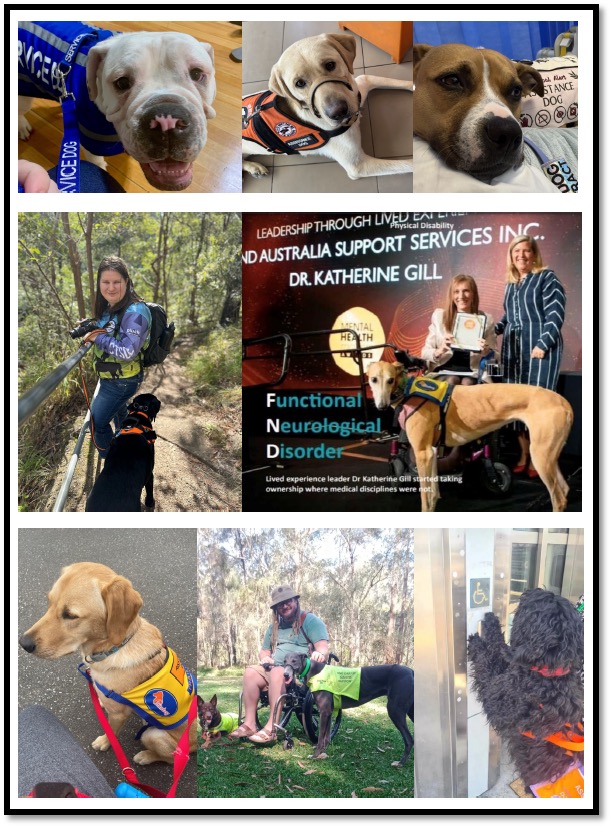
Many individuals living with Functional Neurological Disorder (FND) report significant benefits from Assistance Dogs in managing symptoms, improving recovery from FND flares, and increasing safety and participation in the community.
While there is established evidence supporting the role of Assistance Dogs for disability-related impairments associated with vision loss, mobility impairment, epilepsy, and post-traumatic stress disorder, there is minimal research examining their role in supporting people with FND.
Methods:
This consumer/patient-led study was conducted in partnership with Master of Occupational Therapy students from the University of Sydney and FND Australia Support Services.
The study aimed to gather evidence regarding the role of Assistance Dogs in supporting individuals with FND.
Research questions were informed by the Evidence Advisory Committee (Consultation, September 2025)1. Participants were recruited nationally through FND Australia Support Services, a patient-led charity supporting individuals with FND.
Results:
Findings demonstrated that Assistance Dogs provide life-changing and, in some cases, life-saving benefits for people with FND.
Identified benefits included early warning of symptom onset and symptom prevention; support during episodes; assistance with mobility and safety; support for emotional regulation and wellbeing; enhanced independence and participation; and reduced caregiver burden.
Assistance Dogs were found to deliver continuous, anticipatory, and relational support that exceeds the capacity of human support, assistive technology, or companion animals. Their involvement was also associated with enhanced therapy effectiveness, reduced hospital presentations, and decreased reliance on formal supports.
Conclusion:
Assistance Dogs provide specialised and essential support for individuals with FND, enabling improved safety, independence, and wellbeing. They perform unique, task-specific roles that cannot be replicated by humans or technology and offer a complementary support within the management of FND symptoms.
This study contributes novel evidence addressing an under-researched area and highlights the need to recognise Assistance Dogs as a legitimate and effective support option for people living with FND.
Contact Information: kate@fndaus.org.au